
Author Archives: admin

MOVIE REVIEW - “Fury” is an All Time Great

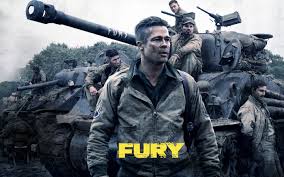
Fury (2014, directed by David Ayer) is a fictional account of an American tank crew fighting their way deep into Germany in April 1945. The war may be over in days or weeks—we don’t know which, and neither does the crew. Led by Sgt. Don Collier (Brad Pitt), the tank crew is most at home inside their steel beast, a Sherman tank. The scenes shot within that cramped, dark hull help ensure that this war film will have a place among the all-time great films of that genre.
fury

The dialogue, violence, and utter hopelessness of war combine in Fury to make something we have never collectively seen before on the silver screen. What exactly is it? David Denby of The New Yorker nailed it when he called it a “war horror movie.”

Comparatively, in Steven Spielberg’s Saving Private Ryan (1998), the horror of war hits us in the face in the opening scenes of the action on Omaha Beach on June 6, 1944, but after 20 minutes the terror fades away to a more common approach to war movies. The action separates out from the real war being fought for Normandy, focusing instead on the quest of a handpicked platoon sent on a special mission to rescue one man. It leads us inextricably to one of the movie’s most memorable quotes, from Sgt. Horvath, played by Tom Sizemore:

Someday we might look back on this and decide that saving Private Ryan was the one decent thing we were able to pull out of this whole God-awful, shitty mess.

Here the audience is deliberately shifted away from the absolute meaninglessness of human life in total war, and together we embark on a great piece of Hollywood fiction. In Fury, the horror of total war never leaves us. Sgt. Collier has been fighting since North Africa, and it shows—from the burns on his back to his interactions with his crew.

In one poignant scene inside the apartment of two German women, Collier’s crew has arrived for a diversion, and we hear from them of the horrors of war they experienced in the Falaise gap in the summer of 1944. It was in Falaise where an entire German army was trapped and destroyed in just days—even pilots flying high above the battlefield were overpowered by the stench below on the ground of the burning, bloated corpses of the dead and dying. The message is clear. This crew has already seen hell and is living it every day. Inside that apartment, we don’t know quite what will happen—no morals restrain Collier’s men. It is only their respect for each other that drives the scene to a conclusion, albeit a horrific one. This movie never loses sight of total war.

The combat scenes are overpowering. Tank shells bounce, skim and ricochet. Men die without knowing what hit them. Others die agonizing deaths—often burning alive in their tanks. Women and children are killed. Prisoners are murdered. In-between the horror we see small glimpses of human decency, but they are fleeting.

We live in the shadow of the “Greatest Generation”—but Fury reminds us that those sentiments were imposed on those that fought after the war was over. Defeating Adolf Hitler and Nazi Germany was a herculean task to save western civilization. Men fought, not out of a desire to do the right thing, but because they had to. There was no other way—kill or be killed. Total war was pure horror, and this film never, ever loses sight of the fact that war is not something to be celebrated. The cost was just too high. Thankfully, this time Hollywood got it right.

Martin Luther King III Weighs In on Race Relations in 2015

Martin Luther King III sees Ferguson riots, violence against police as setbacks

NEWSMAKER INTERVIEW: On the holiday commemorating his father’s epic civil rights legacy, Martin Luther King III says he is dismayed by recent violence against police, the destructive protests in Ferguson and the trashing of a U.Va. fraternity falsely accused of sexual assault because they don’t reflect his father’s own approach to advocate for change peacefully. He… Continue reading

Duke University cedes tower bell for Muslim call to prayer; ‘God help us,’ critics say

The bell tower at North Carolina’s Duke University has a new use - it will be rung by Muslims to issue the call to prayer for those of the faith on the campus. And not all are happy about it. Beginning Friday, the Duke Muslim Students Association will be allowed to chant the call to prayer… Continue reading

BOOK REVIEW: Stark; The Life and Wars of John Stark

stark

Stark: The Life and Wars of John Stark
2014 Black Dome Press
Author(s): Richard V. Polhemus and John F. Polhemus

John Stark, a major general in the Continental Army during the American Revolution, is a major figure in American history and deserves every ounce of energy biographers can give him. Authors Richard V. Polhemus and John F. Polhemus have written an excellent historical biography of him, Stark: The Life and Wars of John Stark (Black Dome Press, 2014). This book will rekindle interest in the American Revolution for many. It is an excellent primer on (and reminder of) the major events in American history that unfolded on the frontiers, in the log cabins and village hamlets of New England, as observed and experienced through the life of John Stark.

We follow young John on many of his early adventures. In 1752, he was captured by Abenaki Native American warriors while on a hunting and trapping trip well north of the settler frontier in Baker River in New Hampshire. The natives took Stark back to Canada and imprisoned him until he could be ransomed by an agent from the Massachusetts Bay Colony the following spring. While in captivity Stark was forced to run a gauntlet of stick-armed warriors, but attacked one of them with a stick and was adopted into the tribe. Stark’s adventurism and travels made him something of a local back country expert, and this expertise ultimately attracted him to the legendary Robert Rogers, a hunter, soldier and adventurer who had already achieved fame along the frontier.

Places like Fort Ticonderoga, Fort Crown Point, Fort William Henry and Fort Edward will long stick in readers minds, as these locations along the frontier (now the border of New York, Vermont and Canada) are the scenes of a great deal of action in this book, both in the French and Indian War and again in the Revolution. At these forts, young John Stark got his early military experience in the French and Indian War under Rogers’ command. Having raised a regiment of New Hampshire men, Rogers appointed Stark his Lieutenant, and Stark would go on to command New Hampshire Militia and regiments of the Continental Army in this same region in the Revolution.

The strength of the book early on lies in the Polhemus brothers’ vivid descriptions of life on the frontier and life at war on the frontier. Nothing about these living conditions was easy. The authors skillfully use the scant primary sources available to them to tell the story of Stark’s trajectory in New Hampshire.

As the authors demonstrate, Stark was instrumental in the Battle of Bunker Hill (1775) in Charlestown, Massachusetts, truly showing up at the right place at the right time with the right attitude to help stem the British assault on Breed’s Hill. Stark also played pivotal roles in the Battles of Trenton (1776), Princeton (1777) and especially Bennington (1777), demonstrating his ability as a true team player and as a vigorous, aggressive commander of troops. In fact, his service in the latter campaign earned him the moniker “The Hero of Bennington” for his contribution to the defeat of a detachment of British General John Burgoyne’s army, which led to Burgoyne’s surrender at Saratoga, New York, that October.

Throughout the book, Stark’s ethos becomes clearer and clearer. He was proud and independent, and would not play politics. This had ramifications for his entire military career. Thus it was not surprising when the other founding fathers sought to form a society for mutual benefit at the end of the war: it was Stark who refused to join. He was somewhat contrarian and clearly roused others to form strong opinions of him.

This book also reminds us of the nature of “total war” during the Revolution. For the revolution was also a civil war, and the leading men fighting the revolution knew it was a matter of victory or death, with the certainty of loss of everything their families had obtained and achieved. For Stark, this could not have been more evident. His hardscrabble existence in New Hampshire, his sawmill, and his farm were the direct product of his own labor and that of his family. Truly, everything was on the line for him. Stark’s long-time mentor and friend Robert Rogers ultimately remained a loyalist and died a penniless, broken man.

This biography gives a great deal more color to Stark’s famous quote, “Live Free or Die,” now the New Hampshire state motto. Stark believed in freedom at any cost. His ethos helped to created something that was uniquely New Hampshire: a focus on freedom more than privilege, and the independence of spirit.

Review by Jeffrey Demers

Congress AWOL on Predator Drone Killings

Evidence in the public domain suggests that predator drone strikes are doing more harm than good. That is not surprising. The Senate Intelligence Committee report released recently similarly showed that post-9/11 torture did not work on al Qaeda detainees and facilitated international terrorist recruitment. Yet Congress has been derelict in failing to conduct comprehensive oversight hearings… Continue reading

BOOK REVIEW: ‘America in Retreat: The New Isolationism and the Coming Global Disorder’

When one considers the breathtaking gains in political stability and economic growth during the 50 years it took to win the Cold War - gains charted, nurtured and achieved under the leadership of the United States - it’s hard to take it in. The establishment of democracy in Japan, South Korea, Poland, Taiwan, the Baltic states… Continue reading

The War Against Islamic State: Where Is Our Media?

The recent death of an Iranian army general highlights the serious gaps in media coverage of the Islamic State (IS). Brig. Gen. Hamid Taqavi was shot in the northern Iraqi city of Samarra by an IS sniper while training Iraqi troops. His death raises obvious questions about Iran’s role in fighting IS: Isn’t training Iraqis to fight IS one of the purposes of the US mission to Iraq? What is Iran’s role in the conflict?

Other recent headlines suggest bombs falling across many parts of Iraq with very few people actually aware of who is dropping them. This is one weird war.

In other IS news, on Dec. 24 a Jordanian F-16 bomber plane was shot down by a heat-seeking missile near Raqqa, the de facto capital of IS, and then IS militants captured the crashed jet’s pilot, First Lieutenant Mu’ath Safi Yousef al-Kaseasbeh. IS immediately called for Jordan’s resignation from the US-led anti-IS coalition. IS also took to Twitter to “crowd-source” suggestions on how al-Kaseabeh should be killed.

All of this came on the heels of journalist Jurgen Todenhofer’s report on his time spent with IS. Todenhofer, of course, concluded that IS is a grave threat to global civilization but “cannot be defeated with bombs or missiles.” Well, then, how is the US going to defeat an entity that is clearly winning the battle for hearts and minds in the Middle East? Most interestingly, Todenhofer has a long history of standing up against war and violence.

Despite the urgency of the IS situation, major American media coverage of events in the region tells us little about what is happening there. A Dec. 29 review of The New York Times, The Washington Times and The Washington Post found IS coverage to be, well, non-existent. What is going on? Did we collectively forget that 4,500 American lives have been lost in Iraq, and another 32,000 wounded?

At least The Christian Science Monitor threw some gas on the fire last week by writing the following headline and subhead: “Worse than Islamic State? Concerns rise about Iraq’s Shiite militias. The Islamic State is a serious threat to Iraq from the outside, former military officials agree. But Shiite militias, which are gaining influence, threaten [Iraq] from within, they say.” Aren’t we being told, on the other hand, that IS is a more serious threat than Al Qaeda? So now, Shiite militias are a graver threat than IS? Again, this is one weird war.

In another surprising story, The New York Times reported on Dec. 28 that Maj. Gen. Michael K. Nagata was turning to the ivory tower of American academia to try to understand IS with a series of conference calls.

Understanding IS begins with the media actually covering its story from Iraq, Jordan, Saudi Arabia, Turkey, and Washington, among other places. Without increased coverage, we as a collective people will not understand what must be done. But for now, coverage will remain awful, our understanding will remain non-existent, and chaos will continue to develop in the Middle East.

~ J. Demers for Global 24 Radio

Joseph Kony, Lord’s Resistance Army warlord, eludes capture in Uganda

GULU, Uganda - Not a day passes that Patricia Akello Wamoyi doesn’t relive the violence inflicted on her family and community by Joseph Kony and his militant cult, the Lord’s Resistance Army, 13 years ago. Her husband’s spirit doesn’t let her forget. “They were child soldiers, people I knew very well,” said Mrs. Wamoyi, 45. “They… Continue reading